
Applications · Workstation Cranes
Workstation Cranes and Jib Cranes: Versatile Material Handling Solutions for the Modern Workplace
How workstation cranes and jib cranes work together to create efficient, ergonomic lifting zones for production, assembly and machining.

Arvanta Industrial
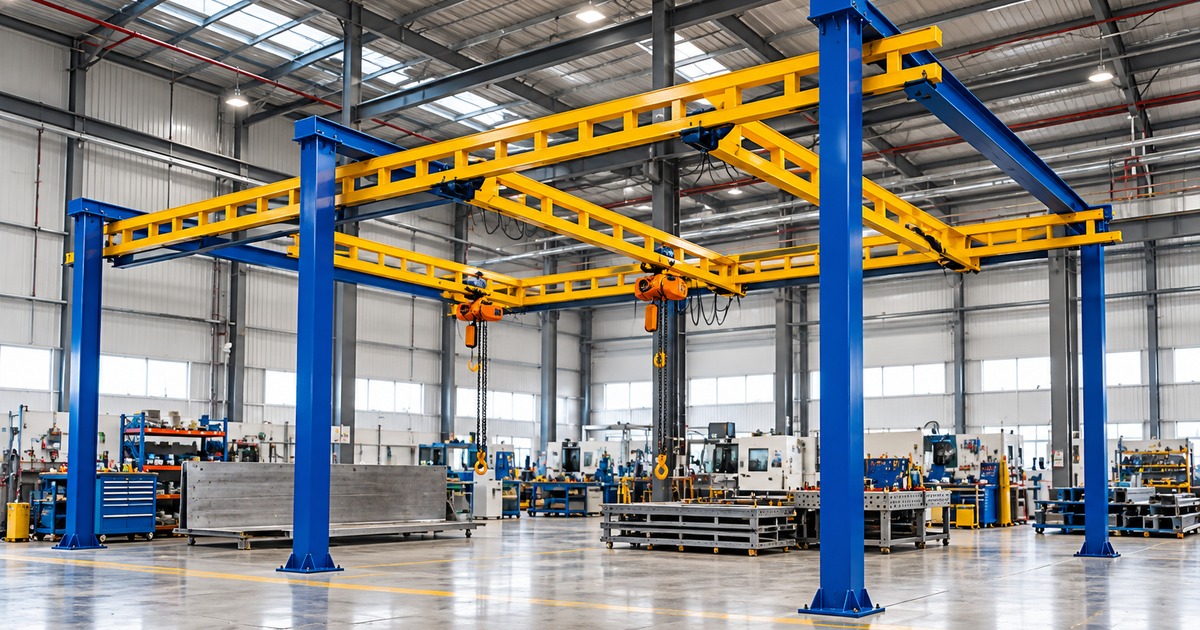
Modern manufacturing facilities are constantly looking for ways to improve productivity, reduce operator fatigue, and create safer, more efficient material-handling processes. While forklifts and traditional overhead cranes remain essential for many applications, smaller and more repetitive lifting tasks often require a more flexible solution.
This is where workstation cranes and jib cranes can make a significant difference.
Rather than viewing these systems as competing technologies, many facilities can benefit from using them together. When properly designed, workstation cranes and jib cranes can create highly efficient lifting zones that support production, assembly, machining, maintenance, and material movement throughout a facility.
What Is a Workstation Crane?
A workstation crane is a lightweight overhead lifting system designed primarily for repetitive material handling within a defined work area.
These systems commonly use enclosed-track or lightweight-profile runway systems that allow operators to move loads with significantly less effort than heavier traditional crane systems.
Workstation cranes can be configured as:
- Freestanding systems
- Ceiling-mounted systems
- Single-girder systems
- Double-girder systems
- Monorails
- Modular runway systems
- Multiple-bridge systems serving the same production area
One of their biggest advantages is their ability to provide smooth, ergonomic movement across a large rectangular working area.
Applications can include assembly lines, welding stations, machine loading, palletizing, component handling, maintenance operations, and repetitive manufacturing processes.
Where Jib Cranes Fit In
Jib cranes provide another type of flexible lifting solution.
Instead of travelling across an entire runway system, a jib crane rotates around a fixed point. Depending on the design, the boom may provide a working rotation of approximately 180 degrees, 270 degrees, or even 360 degrees.
Typical configurations include:
- Wall-mounted jib cranes
- Column-mounted jib cranes
- Freestanding jib cranes
- Articulating jib cranes
- Portable or workstation-style jib systems
Jib cranes are particularly useful where lifting is concentrated around a specific workstation, machine, loading area, or production process.
For example, a jib crane positioned beside a CNC machine can allow an operator to load raw material, remove finished components, and reposition tooling without waiting for a larger overhead crane.
Workstation Cranes and Jib Cranes Can Work Together
A well-designed material-handling system does not necessarily rely on one crane technology.
A workstation crane may provide broad coverage across an assembly or production area, while jib cranes handle repetitive lifting at individual stations within that same process.
Consider a fabrication facility.
A workstation crane could move components between several welding and assembly stations. Once the component reaches a specific machine or workstation, a dedicated jib crane could handle the precise loading and positioning required at that location.
This approach can provide several advantages.
Increased Crane Availability
Using dedicated jib cranes for repetitive workstation lifting means operators do not always need to wait for the larger crane system.
This can reduce production bottlenecks and improve workflow.
Better Ergonomics
Lightweight crane systems can significantly reduce the pushing, pulling, lifting, and positioning effort required from workers.
When combined with properly selected hoists, manipulators, vacuum lifters, magnets, or lifting devices, operators can often move heavy components with very little physical effort.
Improved Production Flow
Instead of designing one crane to perform every lifting operation in a facility, material-handling equipment can be positioned according to each stage of the manufacturing process.
A workstation crane may move material across a production cell while jib cranes perform localized tasks.
Better Use of Facility Space
Workstation cranes can often be installed independently of the building structure, while wall-mounted or column-mounted jib cranes may utilize existing structural elements where appropriate.
The combination provides engineers and plant managers with considerably more flexibility when designing around machinery, columns, conveyors, storage racks, and existing equipment.
Choosing the Right Crane Starts With the Application
Selecting a lifting system should never begin simply by asking, "What capacity crane do we need?"
A better approach is to evaluate the complete process.
Important considerations include:
- Load weight
- Load dimensions
- Frequency of lifting
- Required movement
- Working radius
- Required hook coverage
- Operator positioning
- Production cycle time
- Building structure
- Floor conditions
- Available headroom
- Future production changes
- Below-the-hook equipment
- Hoist type
- Required lifting speed and precision
In many applications, the best solution may actually involve several different types of lifting equipment working together.
Modularity Provides Long-Term Flexibility
Another major advantage of workstation crane systems is their modular nature.
Production environments change. Machines move, assembly lines expand, new products are introduced, and manufacturing processes evolve.
Many workstation crane systems can be extended, modified, or reconfigured as those requirements change.
Jib cranes can also be added around individual production stations as lifting requirements develop.
This flexibility can help companies avoid designing their entire material-handling process around a single centralized crane.
A Complete Material-Handling Strategy
The most effective lifting systems are designed around the movement of the product, not simply the crane itself.
At Arvanta Industrial, we work with manufacturers and industrial facilities to evaluate lifting applications and identify material-handling technologies that can improve safety, ergonomics, productivity, and workflow.
Workstation cranes, jib cranes, hoists, manipulators, and specialized lifting devices can all play different roles within the same facility.
The objective is simple:
Put the right lifting technology at the right location for the right task.
When workstation cranes and jib cranes are properly integrated, the result can be a highly versatile material-handling system that grows and adapts with your operation.
Next step
Take the next step with Arvanta
Whether you manufacture equipment or sell and service it, we start with a short, confidential conversation about product fit, territory and market potential across Canada.
Related insights
Below-the-Hook
Below-the-Hook Lifting Devices: Choosing the Right Tool for the Load
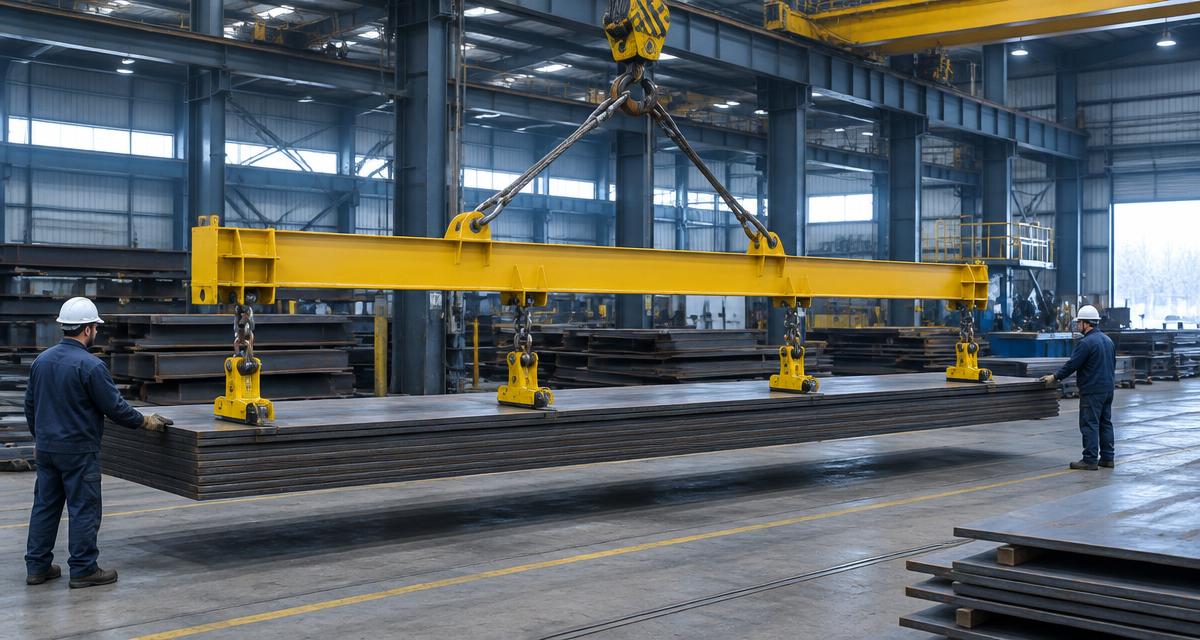
A practical guide to below-the-hook lifting devices — beams, C-hooks, magnets, vacuum lifters, tongs, manipulators and more — and how to match the device to the load.
Representation
What a Manufacturer's Representative Actually Does
A plain description of the commercial work between a factory abroad and a first order in Canada.